Table of Contents
Right here are 3 common misunderstandings regarding regreting that we might believe when we consider our very own or somebody else's means of grieving: Among one of the most usual misunderstandings regarding regreting is that every person undergoes it similarly. As we've established, grieving is a distinct journey that is different for everybody.
If you ever before locate on your own believing, "I'm doing it wrong," attempt reminding yourself that "there's no right or incorrect means of grieving."Moreover, there's no particular order for the phases of sorrow. Our very first psychological response to loss could be rage and anxiety. This doesn't indicate that we're not regreting effectively.
And our feelings can be available in waves of strength. Initially, our feelings can be frustrating. Over time, the strength is most likely to lessen although there may be minutes when it's just as fresh and overwhelming as it was at. Many individuals get annoyed with themselves due to the fact that they think they're regreting also long.
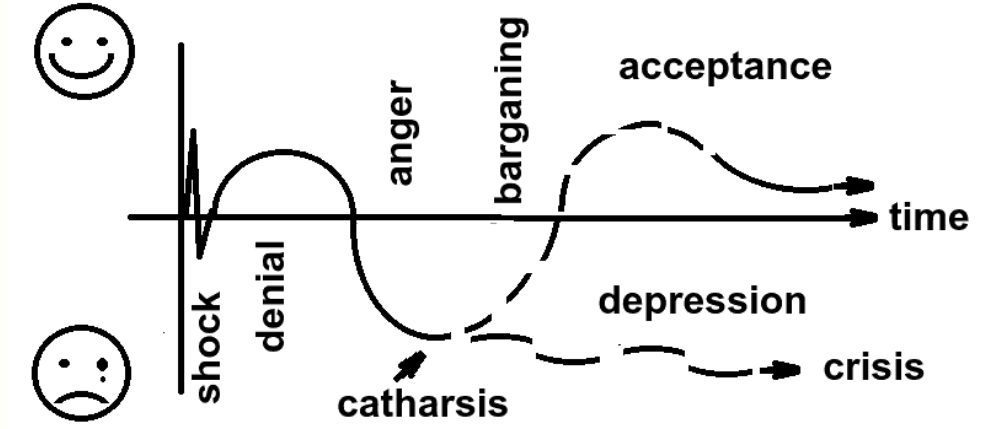
Despair is a challenging process that differs from one person to another. The five phases of pain rejection, rage, negotiating, anxiety, and approval are a practical structure for thinking of grief, yet it doesn't imply we'll undergo every stage. We can experience these facets of sorrow at various times, and they don't occur in one certain order.
When Professional Recognition Fails to Resolve Psychological Struggles
This site uses cookies to assist personalise material, tailor your experience and to maintain you logged in if you sign up. By remaining to use this site, you are granting our usage of cookies.
The seven stages of despair are a design template for how an individual may grieve. This cyclical framework is indicated to assist you much better understand your sensations and is not planned to prescribe how you must regret, what you should be sensation, or in which order. Everybody grieves in different ways. Each phase may come and go or overlap the others.
Discover a lot more about the seven phases of despair. Grief can be a difficult and unpleasant procedure.
When Achievement Doesn't Heal Inner Pain
That's since nobody can ever be absolutely gotten ready for a loss so significant. When you are in shock after a loss, you may behave typically or as if absolutely nothing has occurred. Many of the time, this is because your body has not refined the loss. You may really feel like the circumstance hasn't "sunk in" just.

These sensations and experiences are self-protective devices that function as a barrier so that you are not overwhelmed simultaneously. Because the fatality of an enjoyed one can have such a significant influence on you, you may experience denial. Throughout this stage of grief, it is merely also tough for your brain to understand that your household participant, good friend, or various other liked one is gone.
True Self vs. Professional Persona: Reclaiming Your Real Path Through Therapy in Los Angeles
As you gradually begin to accept the loss and what it implies for your life now, your rejection will certainly start to decrease. You might have a broader variety of feelings and emotions when denial puts on off. Till then, you might have periods when you really feel distressed, which can be activated by tips of your loved one.
Sometimes, it's a normal sensation to desire to avoid others to make sure that you do not need to acknowledge or discuss your loss. In some cases, you really feel absent-minded, obtain conveniently distracted, or hesitate throughout this stage of pain. You might likewise attempt to stay active at all times or closed down emotionally.
Working Through Achievement-Oriented Beliefs
In particular situations, you can also feel upset with the doctor, your friends, relative, God, or any other spiritual being(s) you rely on. Under all that temper is your discomfort. While it may be awkward to manage, it provides a lot more structure to your grieving than staying numb.
Throughout this stage, people frequently feel powerless and hopeless and ask themselves "suppose" concerns. You may feel guilty for not doing even more to maintain the loss from happening or for not investing even more time with the person you shed. During the bargaining stage, it's typical to wonder or claim, "I ought to have done this ..." or "If I had only done that ..." While these sorts of doubts are normal, they are not where you want your idea procedure to continue to be.
Rather, try thinking concerning any good memories you have with them. Occasionally, simply mirroring on these ideas can assist you release the guilt. It might also be practical to do something details, like create a letter to your loved one or speak with them out loud. As soon as you concern terms with the truth of the loss, a deeper degree of unhappiness may start to slip in.
You can also see for a listing of added sources or call the number listed below to get to Drug abuse and Mental Health Providers Management (SAMHSA) hotline. The testing stage of the grieving procedure frequently includes experimenting with various points that aid you progress. In this phase, you are starting to build your brand-new normal in addition to refining your sensations and feelings produced by the loss.
Attachment Healing for Adults Through Narrative Therapy in the Local Area
Getting to the acceptance phase does not indicate you are alright with what took place. Rather, this component of the mourning process is a lot more regarding approving what your life appears like currently. You will certainly still need to listen to your feelings and readjust, yet you will start to feel more wholeeven if it looks different than it did before.

Navigation
Latest Posts
Girls Experiencing Performance Decline and Eating Disorders
Healing from Eating Disorders
Building Coping Skills By Engaging in Trauma-Focused Work for Future Success